
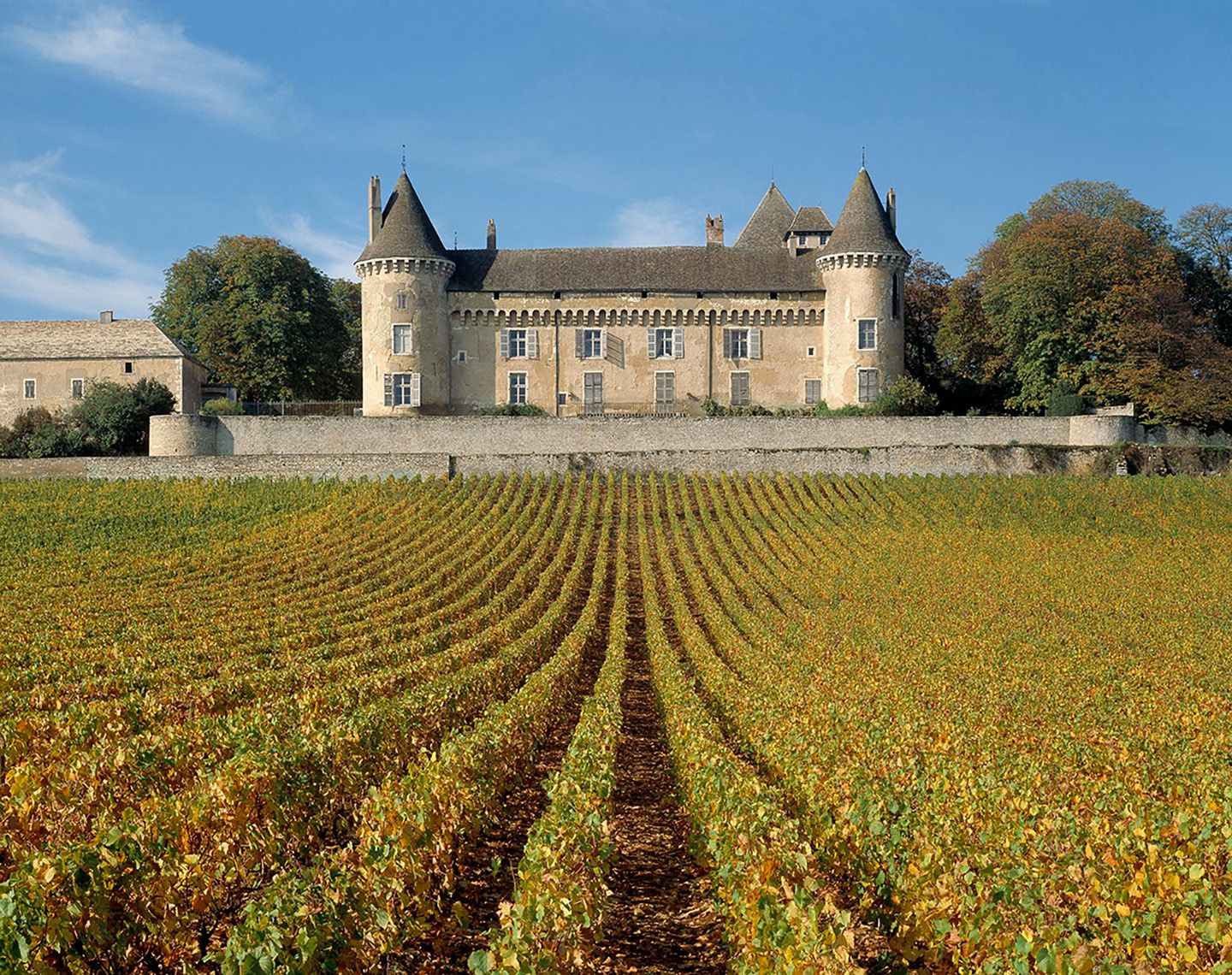
Rully

Rully is in a northern commune of the Côte Chalonnaise sub-region of Burgundy. Red wines are made from Pinot Noir, while the white wines are produced exclusively from Chardonnay and are often fermented or matured in oak barrels.
The appellation was created in 1939, around the same time as most of the other Chalonnaise appellations. Its growing zone extends to neighboring Chagny.

Because it lacks the prestige of the communes just to the north around Beaune and Nuits, Rully’s best vintages provide relatively inexpensive access to some high quality Burgundy wines. In addition some of the best examples of Crémant de Bourgogne come from Rully, giving the appellation something of a reputation as an all-rounder.
23 vineyard sites have been marked out as worthy of Rully Premier Cru status. As of 2018, production area by color was as follows
- White wine: 246.7 hectares, including 68.7ha Premier Cru (609.6/169.8 acres)
- Red wine: 121.3 hectares, including 27.9ha Premier Cru (299.8/69.0 acres)
Rully village sits below the eastern side of a low lying limestone ridge named La Montagne de la Folie, whose name translates literally as ‘Mountain of Madness’. According to the owners of the Domaine de la Folie winery, the name evokes a magical fairy dance ‘La Folia’ whose flickering lights were visible from the villages below.
The ridge is effectively a southern extension of the Côte de Beaune escarpment (its northern tip lies less than 5km/3 miles from Chassagne Montrachet). It runs from north to south, dividing Rully from Bouzeron, the northernmost of the five Chalonnaise wine villages.
The finest Rully vineyards are on the eastern slopes of La Montagne de la Folie. These sites benefit from light-reflective, free-draining limestone soils and an easterly aspect which enjoys the best of the morning sunshine. The lower vineyards, away from the ridge, tend to have lighter soils with less limestone and more sandstone. These sites typically give lighter wines that are best consumed within just a few years of vintage.
Rully was particularly badly affected by outbreaks of phylloxera, particularly so during the global disaster at the end of the 19th century. It also suffered periods of neglect during the two world wars. It has recovered greatly from the 1960s, at which time there were just 70ha (17 acres) of vines in production.